


Decommissioning’s Imminent Evolution: Debriefing D&A GOA 2026
Last month, we co-chaired the Decommissioning and Abandonment Gulf of America conference, the industry’s leading forum for offshore retirement, regulatory alignment, and operational innovation.
After four years chairing D&A, we’ve always walked away encouraged and inspired. This year left us with something more powerful: a shared desire to change the status quo through collaboration and conversation. For those who joined us on April 20 and April 21, thank you for your candor and passion. For those who didn’t, we’re excited to share some of what we discussed.
The Themes that Dominated
At most conferences and trade shows, attendees and presenters who represent the industry from every angle often hold contrasting viewpoints. This year at the Decommissioning and Abandonment Gulf of America conference, almost every session revolved around the same truth from different angles.
Each theme and challenge is intimately connected. The supply chain crisis feeds the planning gap, the planning gap compounds the boomerang problem, and the boomerang problem strains the regulatory framework that allowed the backlog to accumulate in the first place.
But no challenge exists without opportunity. Here’s the good, the bad, the ugly, and the points that matter the most from D&A 2026.
The Assets: Aging, Accumulating, and Coming Back
More than 2,700 wells and 500 platforms in the Gulf of America are overdue for decommissioning, a burden that’s shared between operators, regulators, coastal communities, and the environment.
Platform removal and decommissioning volumes are trending up year-over-year, with the June–July window continuing to concentrate work and strain market capacity. While the Gulf of America is the jurisdiction with the most wells requiring immediate and effective close-out, the gap between existing decom resources and projects is profoundly impacting infrastructure internationally.
The transition from shelf to deepwater is underway.
The industry spent decades developing mature competencies for shallow-shelf work. While this era is ongoing, the need for mid- and deepwater decommissioning is also accelerating.
Most moored semi-submersibles have left the Gulf, and it remains unclear what assets will be used to abandon those wells. Floating structure decommissioning requires fit-for-purpose tooling that does not yet exist off-the-shelf, and compressed development timelines are becoming the norm.
Each well type presents categorically different decom challenges, introducing another layer of complexity to an already fractured market.
Boomerang assets are a defining crisis.
Assets returned to predecessor operators, often called boomerangs, dominated the discussion across both days. These assets are frequently returned in degraded condition, often without reliable documentation, clear well status, operational continuity, or current lease agreements.
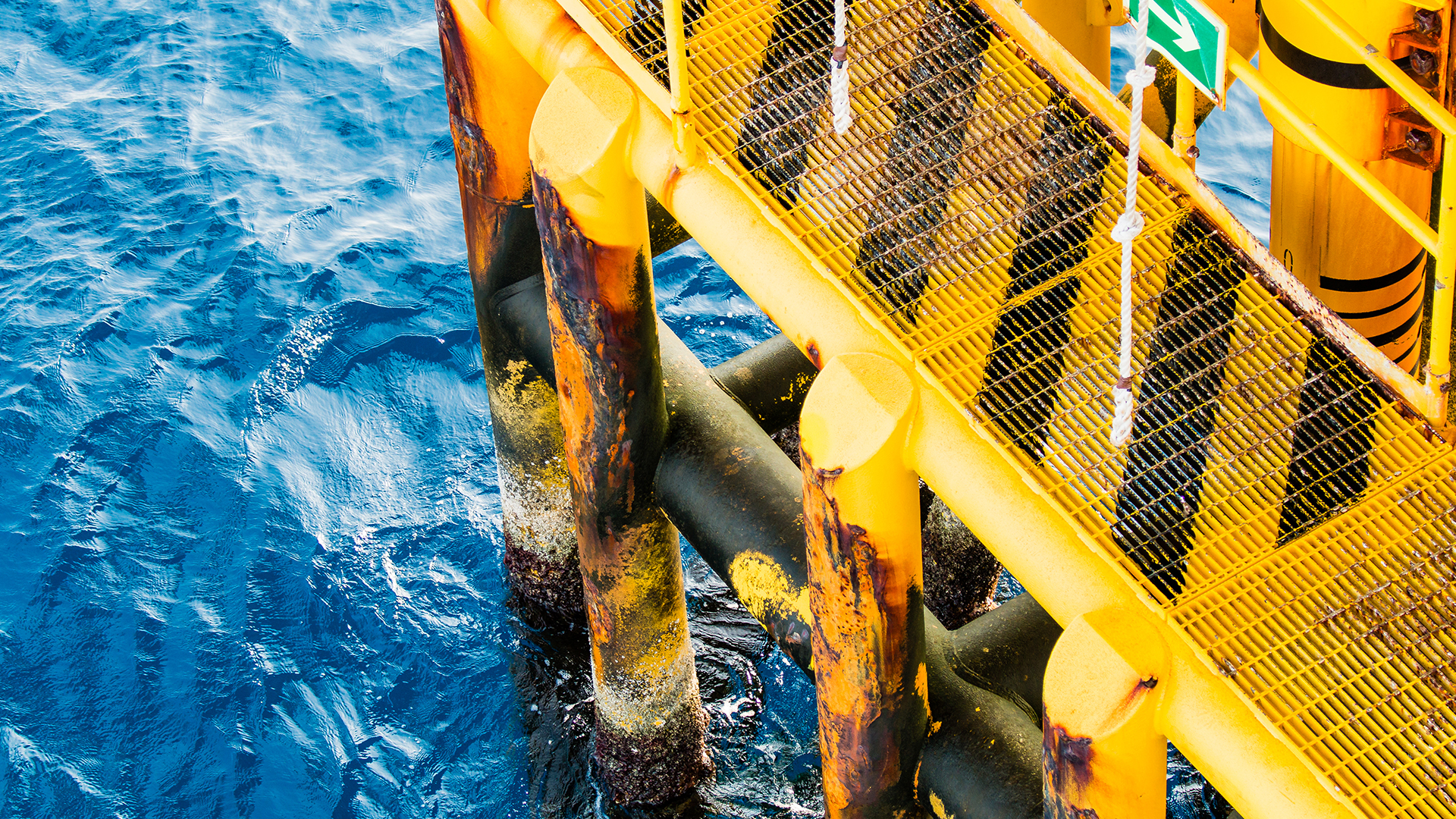
One operator described receiving a platform with spongy decks, missing handrails, and an inoperable crane and helideck — rightly earning the asset the nickname the “widow maker.” Another learned they owned an asset only when a BSEE order arrived. As decades worth of deprioritized, underfunded, and ignored infrastructure compounds, boomerang assets are becoming the rule, not the exception.
The Opportunity
Operators who act before assets reach the point of no return can lower decommissioning costs through early planning, reduced regulatory exposure, permanent liability relief through structured financial frameworks, and the ability to capture remaining production value that would otherwise be left on the table.
The Supply Chain: Shrinking, Strained, and Seasonal
Heavy-lift vessels, lift boats, derrick barges, and specialized service providers are leaving the market faster than new capacity is entering it. And when these assets leave, they rarely return. The result? A shrinking execution window, rising cost pressure, and a supply chain that cannot be treated as infinitely available.
Vessel availability is in structural decline.
Presenters shared sobering numbers on fleet attrition: the available lift boat fleet has reportedly dropped from 66 vessels (175-class and above) in 2014 to just 27 today, with the 335-class entirely gone from the market.
According to multiple speakers, a new-build lift boat would require a four-year guaranteed contract at roughly double current rates to pencil out. Several sessions noted that almost every historically active heavy-lift vessel or derrick barge has either left the market or been sold in distress.
Seasonal timelines impact workforce quality.
With limited vessel availability, decommissioning happens on a seasonal basis. Several speakers emphasized how this trend causes labor shortages. When crews are let go after summer and reassembled the following spring, operators lose time, institutional knowledge, crew cohesion, and safety culture momentum.
As one presenter puts it, the people don’t wait around. They move to other industries, other markets, or retirement, and most don’t come back.
Partnership is the only sustainable path forward.
The case for long-term operator-contractor relationships was made from every angle across both days. Multi-season visibility, rate stability, equipment investment, and crew retention all require coordinated commitment, not transactional contracting.
The Opportunity
Choosing a decommissioning partner with a tried-and-true supply chain based on real-performance data is becoming an operational necessity. Promethean scans the market for the best-fit, most cost-effective solution for each project.
Technology: Decommissioning’s Future Foundation
This year, the conversation moved from “what if” to “what’s working.” Across both days, presenters described AI, next-generation cutting systems, and redesigned P&A tools as field-proven realities
AI is no longer a talking point.
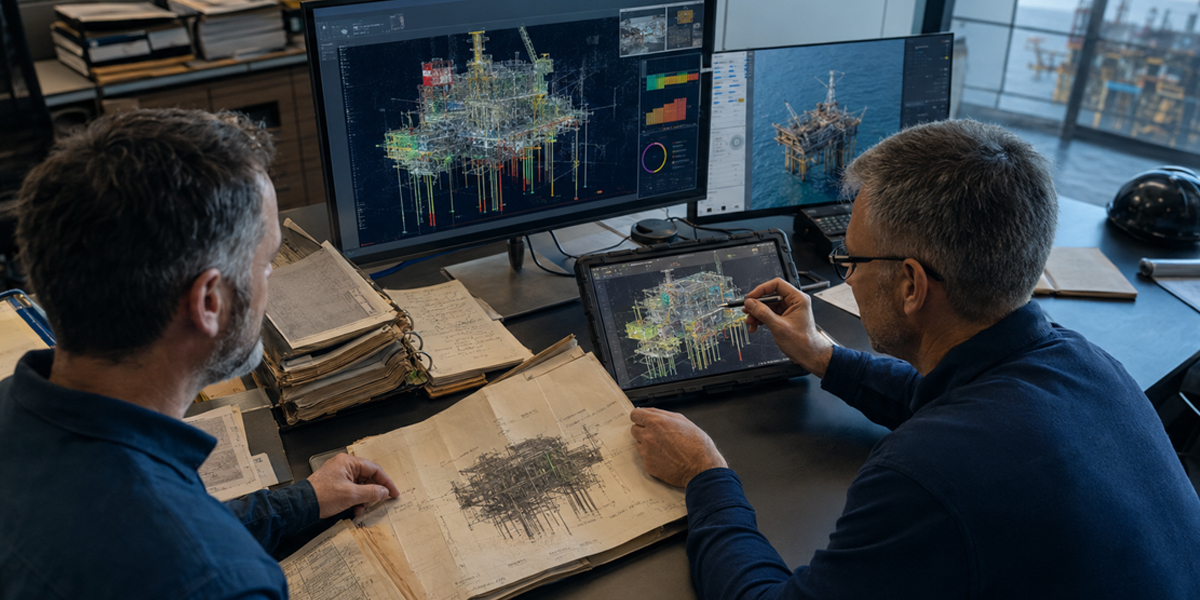
One operator described building a proprietary AI data lake from over 2 million digitized documents, enabling engineers to retrieve complete well histories in minutes instead of the one-to-two weeks it used to take. Their next step: training AI on 300+ completed P&A campaigns to auto-generate draft abandonment programs and cost estimates.
At Promethean, AI is already embedded in how we work. Visual intelligence cameras deployed offshore monitor crew behavior and flag safety risks in real time. Our AI partnerships are compressing weeks of manual engineering review into hours, generating well abandonment strategies and risk assessments from decades of ingested field data.
In June, our Digital and AI Lead, John Boyd, will take the stage at the NOIA/OOC Offshore CCS & New Frontiers Symposium at Rice University’s Baker Institute to introduce the offshore industry’s first integrated AI roadmap. It’s the first time this caliber of technology will be presented as a unified strategy for offshore asset management, and we’re proud to be the ones leading that conversation.
Cutting and recovery tech is transforming pipeline decommissioning.
Several presenters showcased integrated systems that are fundamentally changing the economics of pipeline and umbilical recovery. One system demonstrated up to five times the efficiency of conventional approaches, recovering 600 meters of pipeline in a single day during a proven 120-day campaign. Another introduced a dual hydraulic shear system cutting every seven minutes with no personnel in the danger zone.
P&A tools are being redesigned from the ground up.
Across both days, speakers introduced new P&A technology platforms solving different operational constraints. One company described additive manufacturing capabilities that produced 40%-lighter components to replace OEM parts that can no longer be sourced. Another company introduced a long-duration composite barrier rated to 7,500 PSI with a 15-minute drill-out time. One platform demonstrated an e-line platform that combines plug, cut, and punch operations in a single run.
Contracts shape what technology reaches the field.
Fixed-scope integrated contracts create the incentive for contractors to invest in efficiency because they capture the gains. Time-and-materials contracts do not. Several operators are actively restructuring toward integrated models that incentivize innovation across engineering, P&A, pipeline, and facility removal.
The Opportunity
Operators who integrate technology into their operating model will reap the most benefits. AI-assisted well planning reduces costly surprises offshore. Real-time monitoring gives teams the ability to flag anomalies and adjust before small issues become expensive ones. Digital cost tracking makes every vendor dollar visible and auditable from the moment it’s spent.
When these tools work together, they compress timelines, improve safety performance, and deliver the cost certainty that lump sum commitments depend on. Case in point? In 2025, our digital infrastructure made every project cost auditable in real time, and every project we delivered came in under budget with a 0.00 total recordable incident rate.
Planning: The Cheapest Investment You’ll Ever Make
We heard speakers say again and again: the quality of planning directly and measurably determines the quality of execution. Music to our ears.
One operator’s first attempt at a deepwater campaign cost $16 million without completing its objectives. Their second attempt succeeded under budget. Another operator’s multi-field campaign encountered six storm demobilizations, undocumented downhole tools, H2S from prior seawater injection, NORM, and sustained casing pressure across 29 wells and 10 platforms. Almost all presenters acknowledged the need to build contingency plans for the field reality you aren’t executing.
At Promethean, our planning approach mirrors how the most advanced operators plan critical drilling projects and production turnarounds: methodical, line-by-line construction of the program with all key contractors present, risks identified, and solutions integrated before mobilization. Every project we’ve completed has come in under budget and free of incidents or legacy liabilities.
Promethean’s Session: Operational Discipline in Action
While the broader conference explored the scale and urgency of the challenge, our session focused on demonstrating what disciplined execution actually looks like right now.
The Model
COO Martyn Fear opened by introducing Promethean’s decommissioning capabilities through the lens of an operator, not a service contractor. It’s a distinction that changes everything. Because our model is built on lump sum commitment rather than time-and-materials arrangements, our margin depends on driving cost and efficiency. Acting in operators’ best interest is in our best interest.
Then, Martyn walked through Promethean’s operating practices across supply chain management, solution development, and execution with a focus on intensive onshore and offshore oversight, continuous improvement practices, and emerging technology contributions.
The Proof
SVP of Commercial Steve Louis then outlined a case study from one of our most challenging recent projects: an orphaned well on a listing, corroding, gas-leaking platform in the Gulf of America.
The platform was listing at 12 degrees due to a failed jacket-pile-deck stab connection, effectively cantilevered on only two of three legs, with the center of gravity dangerously close to the tipping point. The wellhead was rocking continuously, a valve stem had broken off, and there was a confirmed gas leak. Cross members were corroded and separated, compromising the jacket’s structural rigidity below its original design criteria. And there was no sub-deck access to the lower wellhead components.
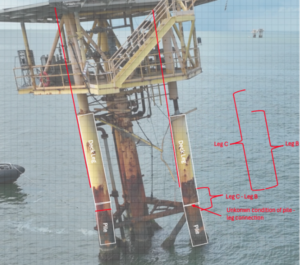
Every risk demanded an engineered solution before a single tool went downhole. The team drilled through jacket, pile, and deck stab to install a 4-inch pin through a 34-inch jacket leg, timing each drill hole as the deck heaved inside the jacket. Angle iron bracing was welded in place to immobilize the well conductor. Scaffolding was hung below deck over open water at a 12-degree incline to create a makeshift 360-degree cellar deck. Wellhead components were replaced, the well was restored to operational standard, and a gauge run confirmed both completions could be accessed.
Seven days of offshore work followed five intensive days of engineering and risk assessment. The asset was permanently plugged and abandoned, with zero significant downtime, under budget.
The Bottom Line
We walked into D&A GOA 2026 as co-chairs. We walked out more convinced than ever that the model we’ve spent years building (supermajor-level discipline, an asset-light structure, escrow-funded commercial frameworks, and AI-powered planning) is right on time.
Yes, the challenges are real. But every one of them comes paired with an opportunity for companies willing to plan earlier, execute with greater discipline, and invest in the partnerships and technology the industry needs. The only way forward is together, and we’re ready to lead.
 Share
Share