


Safety: The Backbone of Responsible Late-to-End-of-Life Asset Management
You’ve heard the phrase “safety first” a million times. Almost always said without ill intent, the phrase fails to capture the full weight of what safety demands. Yes, safety should be considered first. It should also carve out every operational phase from SOP to post-project verification and process optimization, and every step in between.
In the world of offshore decommissioning and late-life production, this truth carries more weight. The U.S. oil and gas extraction sector carries a fatal injury rate of 14.2 per 100,000 workers, nearly four times the private industry average. Offshore, the risk is even greater. The International Association of Oil and Gas Producers reports an offshore Fatal Accident Rate of 1.31 compared with 0.56 onshore. Degraded structures, unknown conditions, and legacy hazardous materials, often synonymous with late-life optimization and decommissioning efforts, introduce even more exposure.
While the main reason for safety measures is obviously to protect personnel, it also serves as the baseline for project efficiency. When safety is considered and prioritized at every stage of a project, protocols also safeguard project timelines, budgets, and reputations. The same variables that create uncertainty and pose risks to teams also undermine operational efficiency. Unexpected conditions skyrocket costs and multiply timelines by weeks.
On a larger scale, safe decommissioning lowers risk down the road for nearby communities, ecosystems, and future operators. Why? Simply because it increases the odds that the project is performed correctly — and most importantly — completed at all.
To move forward, the industry as a whole must reprioritize safety. Let’s talk about it.
Why We’re Here: Yesterday’s Deferrals
For decades, late-life and end-of-life assets were treated as afterthoughts. Operators focused capital, talent, and attention on production. When a well stopped making economic sense, the instinct was to defer maintenance, planning, and eventually discuss what comes next. More often than not, committees opt to pass the asset along and let someone else figure it out.
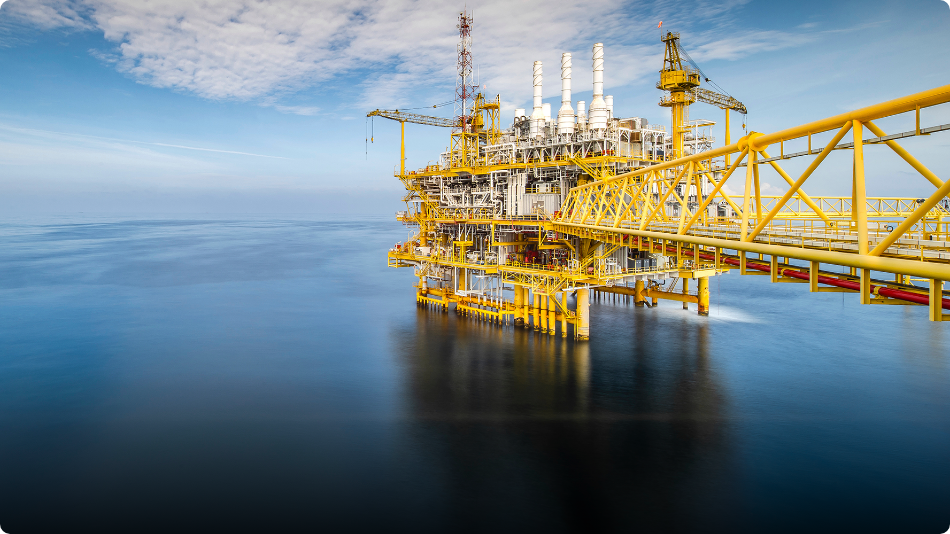
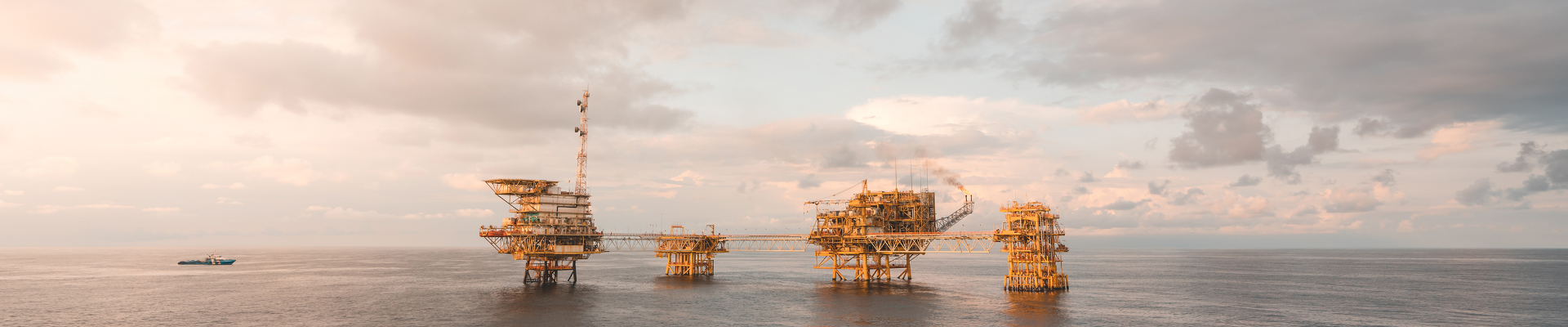
Today, this pattern is defining the state of the Gulf. The GOA’s outer continental shelf has more than 1,800 active production platforms, with over 60 percent of them more than 25 years old. Structures built in the 1970s and 80s are still standing in water, weathering hurricanes, accumulating marine growth, and corroding from the inside. As of mid-2023, more than 2,700 wells and 500 platforms are overdue for decommissioning. And the longer these assets sit unaddressed, the more dangerous and expensive they become to the crews handling them, the environment, coastal communities, and operators’ bottom lines.
Where We Are: Today’s Price Tag
Boomerang assets (structures passed down through bankruptcies and acquisitions to organizations that didn’t operate them) are becoming the rule, not the exception. The physical consequences of deferred maintenance are specific and serious. Corrosion weakens structural joints; marine growth adds load to members not rated for it; pressure builds in wells. Over time, hazardous conditions compound: NORM can build up in internal scale, seawater injection can contribute to H₂S formation, and compromised wellheads can release methane.
Without processes and technology that inspect platforms without exposing personnel, operators must send crews into conditions no one has verified. Though less immediate, the environmental toll poses an equally devastating threat. Methane is more than 80 times more potent than CO₂ over a 20-year period, according to the Environmental Defense Fund. Every leaking well is a compounding atmospheric contribution. Improperly abandoned platforms create navigational hazards, disrupt ecosystems, and leave behind chemical legacies that take decades to understand.
Safety Protocol Hasn’t Caught Up with the New Offshore Reality
Offshore safety frameworks were built for a different decade and a different set of problems. Most regulatory and operational standards focused on producing assets and drilling facilities: platforms and vessels with staffed teams, active monitoring, and known maintenance schedules. They treated decommissioning as a brief, predictable closing chapter, not the years-long, asset-by-asset reckoning it has become.
The Center for Offshore Safety’s 2024 Decommissioning Summit cites corrosion-compromised structural integrity, dropped objects from deteriorating equipment, contractor management failures, and chemical exposure from long-idle infrastructure as now the defining risk categories of this work.
At D&A GOA 2026, one team described inheriting a platform with rotted decking and missing handrails that their own crews privately called “the widow maker.” Another described a well that reported sustained casing pressure every month for a year with no one physically on the platform to verify it. The baseline is shifting, and decommissioning processes must evolve in tandem.
Explore more insights from D&A GOA 2026 >
What Effective Safety Actually Requires
Solving the offshore decommissioning safety problem requires a new set of operating assumptions, applied consistently, at every stage of a project.
1. Verified Reality Over Inherited Documentation
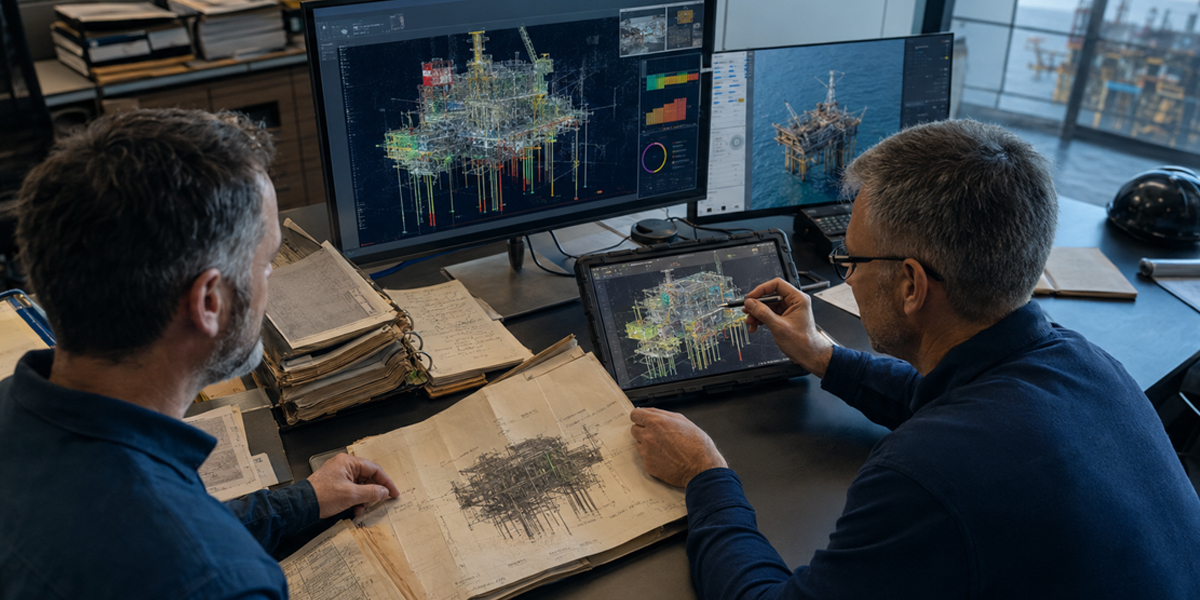
With an asset that’s changed hands two or three times and left unmaintained for years, the numbers often don’t capture the fullness of the damage ahead. Treating documentation as a starting hypothesis to confirm, rather than a fact to act on, ensures structural failures are found through remote surveying and digital modeling, instead of crew member exposure.
Our Approach:
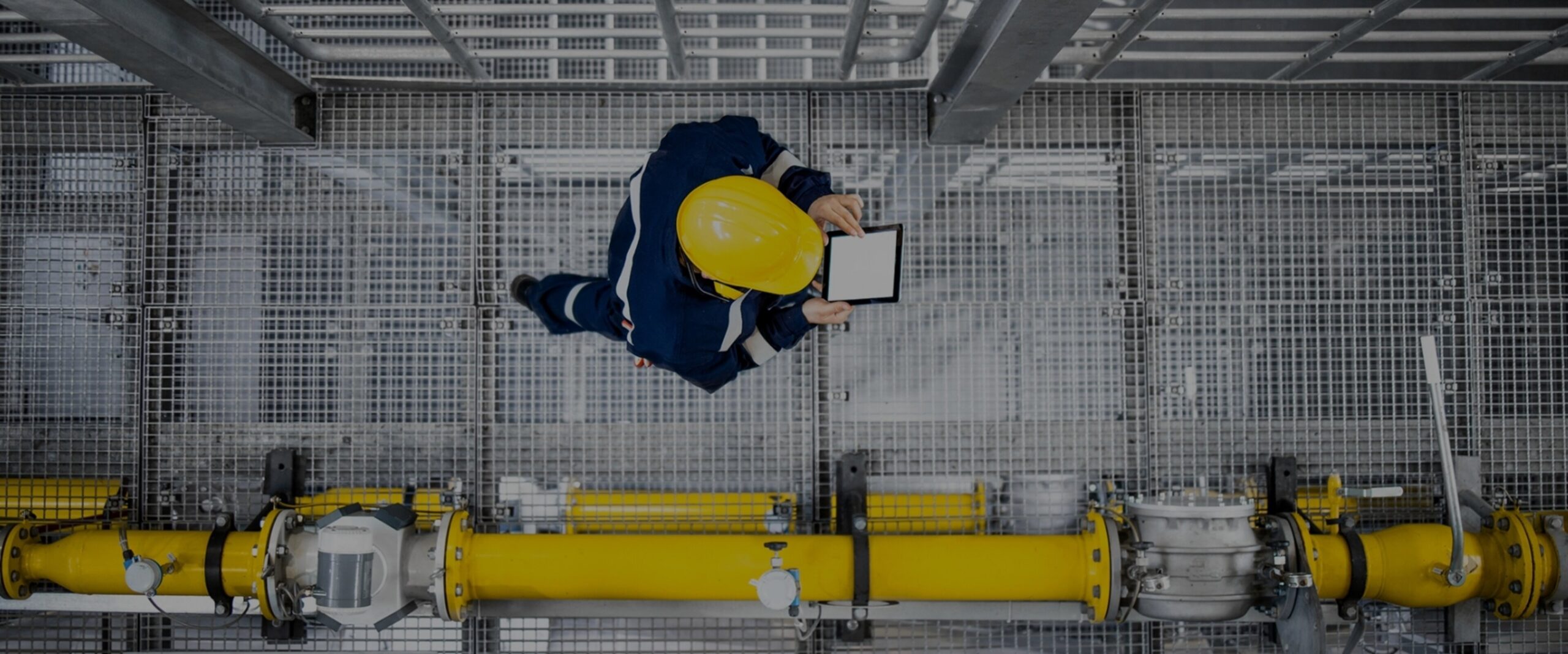
Promethean deploys drones equipped with ultra-high-definition cameras and LiDAR scanning to assess actual conditions from a distance. The LiDAR survey generates a dense structural map of millions of individual data points, allowing engineers to evaluate dimensions, identify access points, and flag structural anomalies
When the structural survey reveals damage, as it often does, the platform itself gets rebuilt before well work begins. Decking, stairs, and handrails are replaced first. This “make safe” step is the foundation on which the rest of the project stands, literally and procedurally.
2. Risk Assessment Before Mobilization
The industry’s default mode on decommissioning work has long been to send a vessel, a few baskets of tools, and figure out the specifics in the field. The alternative is to run every operational step through a structured, iterative risk review, with every contractor in the room, before a single vessel leaves the dock. This “operator-style planning” resembles that applied to critical drilling projects, or major platform turnarounds, and eliminates surprises and ensures the team has a pre-agreed protocol when the project reaches the execution phase.
Our Approach:
Once the digital picture is built, Promethean runs an iterative, HAZOP-style risk assessment with every key contractor in the room before mobilizing. Every operational step is walked through line by line: do-ability, risk, sequencing, contingencies, who does what, and what prior projects have already taught the team.
3. Incentive Alignment in Vendor Selection
A contractor or operator that profits from selling specific equipment has a built-in reason to recommend that equipment, whether or not it is the safest or most appropriate choice for the job. Removing that incentive by selecting vendors purely on performance, safety record, and fit closes one of the quieter but most persistent misalignments in offshore contractor management.
Our Approach:
Promethean carries no service-side equipment of its own, which means there’s no incentive to force-fit a tool or technique that isn’t the safest, most fit-for-purpose option available. Every contractor is benchmarked on dependability, safety record, quality, and, of course, cost.
4. Continuous Monitoring Over Point-in-Time Inspection
A safety walkthrough once a shift catches a fraction of what’s happening on a deck at any given moment. When systems observe behavior and conditions continuously and flag deviations automatically, anomalies are recognized and addressed before they become incidents.
Our Approach:
Detect and T-Pulse AI-enabled cameras monitor work activities, facility conditions, and PPE compliance in real time, generating observations automatically rather than waiting for someone to notice and report. Every observation, whether AI-generated or logged by a person on deck, feeds directly into Veris Promethean’s field management platform, where it gets sorted into pathways for immediate response.
5. Closed loop Learning Instead of Siloed Lessons
Across the industry, near-misses and hazard discoveries are frequently logged and then forgotten, trapped inside the system of the company that found them. A genuinely safer model treats every observation as an input for the next project plan, not just a record of the last one.
Our Approach:
Every morning before work begins, crews review real safety bulletins drawn from incidents around the world, selecting those most relevant to the tasks ahead over the next 12 hours. The briefing is a live transfer of what went wrong somewhere else yesterday, applied directly to the work in front of the team today.
Promethean’s Safety and Environmental Management System is woven directly into this same digital infrastructure, so safety data, field activity, and cost tracking flow through a single connected system, and daily safety planning reflects the most up-to-date insights.
Promethean’s Model: Safety as Infrastructure
Promethean’s safety model spans three connected stages of continuous improvement: planning, execution, and post-project, with each stage feeding into the next. Field discoveries inform the next project blueprint. Planning determines which technologies go on deck. The data those technologies capture becomes the evidence base for the next plan. Every time we execute, we get better the next time around.
The Multiplying Impact Effect
Every observation, lesson learned, and service quality event captured during a project becomes input for the next one. Supply chain performance data updates on how the next vendor gets selected. Structural and wellhead findings update the risk library used in the next HAZOP.
AI models aggregate data across projects, building a sharper baseline of what aging assets actually look like beyond the paperwork. The next team stepping onto a similarly degraded platform starts informed, not forced to rediscover the same risks from scratch.
The environmental and safety outcomes compound in the same way. Because Promethean delivers every project on time and under budget without sacrificing this level of rigor, operators have an incentive to close out aging assets now rather than defer them another year and let the risk compound further. A repeatable, provable safety and execution record is what turns “we should probably deal with that platform eventually” into a signed contract.
A Safer Standard For People, Platforms, and Places
As more of the Gulf’s aging infrastructure comes due, the sector’s reputation, its relationship with regulators, and its standing with coastal communities will be shaped by how many of these assets get handled this way instead of the old way. Every platform closed out safely makes the case a little harder to ignore. The technology, operating framework, and expertise exist. The industry desperately needs it. The future of responsible stewardship is here, and it runs on 360° safety.
Learn more about our process >
 Share
Share