


From Supply Chain to Chain Reaction: Building a Predictable Path to Upstream Asset Retirement
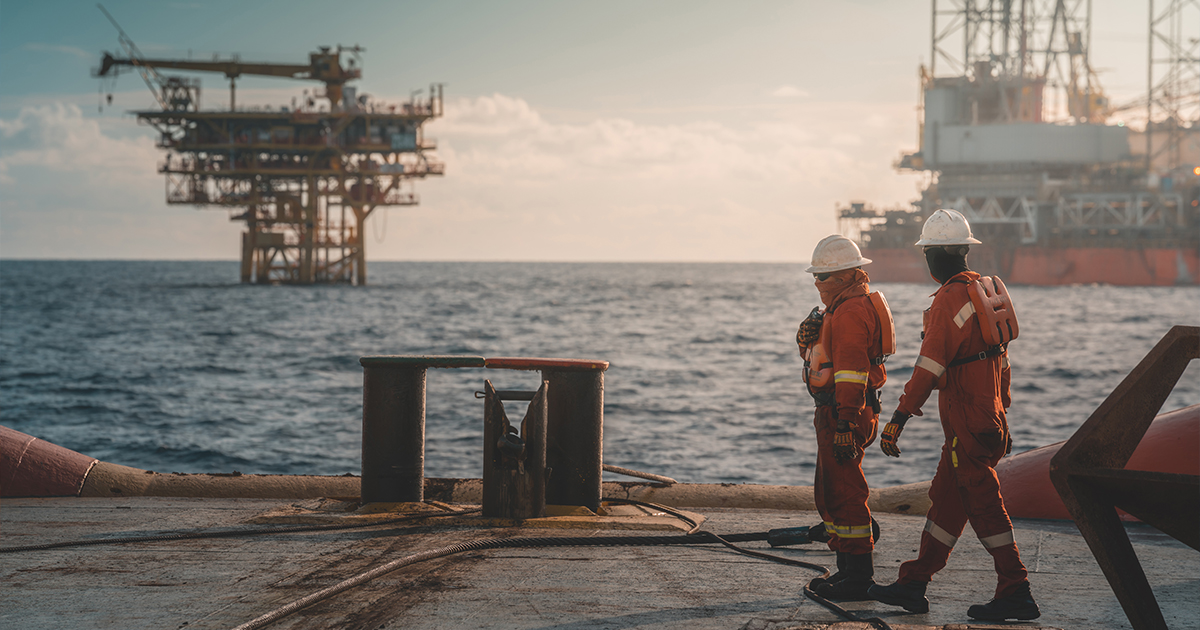
Late-life production optimization doesn’t occur in a spreadsheet. Neither does responsible, efficient decommissioning. No matter how advanced your technology or how meticulously engineered your strategy, a plan is only as good as your ability to put physical assets and skilled people out in the field.
Today’s GOA Supply Chain
Over 60% of Gulf of America production platforms are now more than 25 years old, and the capacity available to retire them is steadily decreasing. The GOA’s fleet of 175-class-and-above liftboats has reportedly fallen from 66 vessels in 2014 to just 27 in 2026, with the 335-class disappearing entirely.
Nearly every historically active heavy-lift vessel or derrick barge has either left the market or been sold in distress. Meanwhile, the Gulf is losing the people who know how to do the work, as well.
At D&A GOA 2026, speaker after speaker touched upon the difficulty of assembling the right vessel, crew, and specialized talent at a reasonable cost. The pipeline of new engineers, P&A field hands, and other specialists is narrowing just as demand for their expertise is growing.
Seasonal contracting makes retention even more challenging. When crews are released after the summer window and rehired the following spring, many don’t wait around. They leave for other industries, other markets, or retirement. No matter which alternative they choose, years of field knowledge leaves with them.
Transactional contracting is making responsible decommissioning more difficult and more expensive. Simply put, the status quo approach is steadily eroding the vessels, crews, and specialist capabilities the Gulf will need to work through its sizable decommissioning backlog.
Forging a Predictable Path to Execution
To protect the capacity the Gulf still has, we need to rethink how we contract for decommissioning and create a more predictable path to execution.
Ultimately, the supply chain problem is a risk problem. Uncertain vessel availability, loose scopes, and the transactional contract approach combine to put all the responsibility on operators — and they often pay the price. Shifting schedules, escalating day rates, additional mobilizations, and change orders make the final cost of decommissioning difficult to predict.
A lump-sum strategy shifts liability away from the operator. Promethean creates lump-sum bids by diagnosing the asset, defining the scope, aggregating subcontractor proposals, and pressure-testing the execution plan. We identify as much uncertainty as possible before mobilization, when it’s still relatively inexpensive to solve for.
Once the lump sum is set, we have a financial incentive to finish the project at the contracted budget. Instead of selling days, equipment, and labor independently, we take responsibility for assembling the vessels, crews, technology, and services that deliver the required outcome.
When operators can move forward with less risk and a predictable pricing model, they’re less likely to defer. A practical path to responsible late-to-end-of-life asset management starts and ends with the supply chain.
Finding the Best-Fit Solution
Another critical element of supply chain optimization is matching the right resource to the right scope. From vessel and crew to contractor and technology, every choice shapes your project’s dynamics. Finding the best-fit solution can significantly impact a project’s cost, offshore exposure, emissions, and schedule. Here’s how we do it.
1. Qualify
To be considered as a vendor, suppliers must earn a place at the table. We meticulously assess reliability, quality, team, and financial health before prices are ever discussed.
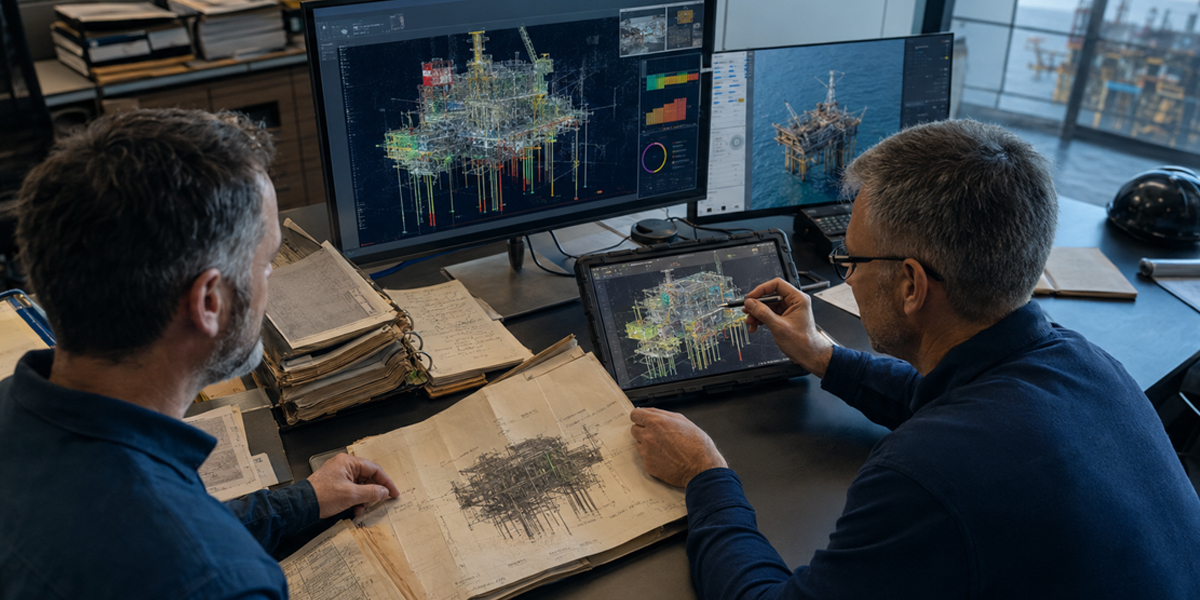
To identify the best contractors for the job, we leverage our team’s deep collective history of decommissioning work, an integrated data management system that captures and structures data across every project, and an AI roadmap that turns that data into clear performance metrics.
2. Select
Once we scour the full supply chain for best-fit vendors, we begin the selection process. Because Promethean Energy is vendor-agnostic, we make decisions based on competitive benchmarking, scope requirements, and project fit rather than solely existing relationships.
To reduce costs and environmental impact, we also right-size every choice. This could include measures such as installing platform cranes to eliminate the need for separate crane vessels, adding quarters to platforms to remove reliance on flotels, and optimizing base locations to shorten vessel trips. Using this approach, we’ve reduced 215 tons of carbon emissions while shrinking cost and offshore exposure for operators in the GOA.
3. Contract
We lock terms, confidentiality agreements, and compliance requirements before execution begins. Tightly controlled contract terms keep costs from creeping as a project progresses. The lump sum we offer clients is built directly from benchmarked subcontractor proposals, so every commitment traces back to a specific scope and a specific price.
4. Execute
We maintain direct accountability for every contractor offshore. It starts in the planning room, where we develop project roadmaps the way advanced operators do with critical drilling campaigns and production turnarounds.
5. Improve
Our integrated data management system captures every supply chain data point. We leverage this data and our AI roadmap to turn insights into critical optimizations. Vendor performance data guides future selections, which helps ensure the bench gets stronger with every job.
The Strongest Link
The closer we are to vendor operations, the more competitive the prices we can offer to our clients. We’re moving toward becoming an advanced integrator of supply chain contributions and are actively working to build relationships that go deeper than procurement.
Our goal is for selected contractors to operate as extensions of our team. When vendors and crews gain access to better tools and contracts, returns go further for everyone involved.
- Integrate: Contractors who plan alongside us, execute with us, and share our data are part of how we work, not just who we hire. Deeper integration means shared standards, shared lessons, and crews who know our assets and procedures before they arrive.
- Partner: Multi-project relationships give contractors the visibility to invest in equipment and keep experienced crews employed. Our clients get continuity, consistency, and fewer startup risks.
- Co-develop: Many of the Gulf’s toughest decommissioning challenges require tools that don’t yet exist off the shelf. Working directly with contractors and technology providers lets us shape solutions around real field conditions and share the value they create.
- Access: We already use visual safety intelligence offshore, and AI-assisted abandonment planning has cut planning time by 85%. With preferred access, we can deploy what works sooner, at a cost that makes sense for our clients.
Built to Hold
Responsible stewardship ultimately depends on the industry’s ability to execute with the right vessels, crews, contractors, and technology behind every project. Building that future requires predictable work.
When operators replace transactional hiring with multi-project commitments, contractors get the stability they need to maintain fleets, retain experienced crews, and build new tools. Over time, this creates a healthier supply chain. Granular insights help vendors improve, skilled vendors earn deeper relationships, experienced crews stay engaged across projects, and critical assets are more likely to remain available when the next scope begins.
That, in turn, creates a powerful chain reaction: Better information creates better decisions, better decisions strengthen execution, and stronger execution makes responsible stewardship possible at scale across the late-to-end-of-life continuum.
 Share
Share